





The Mystery of 1998 KY26: A Lost Probe or Just an Asteroid?
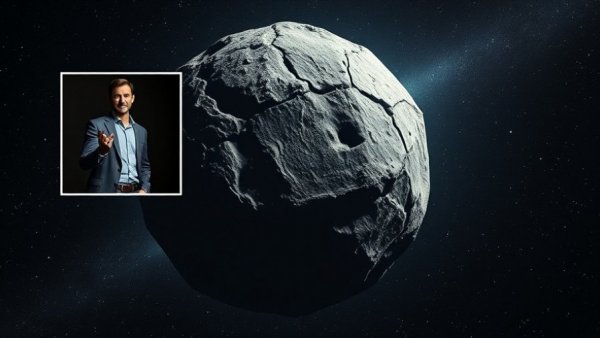
In a perplexing turn of events, the Japan Aerospace Exploration Agency (JAXA) has scrapped a planned mission to study the enigmatic celestial object known as 1998 KY26, prompting concerns among scientists that the window to truly understand this object has vanished. Avi Loeb, a Harvard astrophysicist, posits that KY26 may actually be the lost Soviet probe Phobos 1, lost in 1988. The implications of this assertion could change our understanding of space history and highlight the potential for encounters with technology from past missions. This speculation has spurred debate not just among scientists but also within the realm of public interest in space exploration.
Why Does It Matter?
For many in the scientific community, the cancellation of the 2031 Hayabusa2 mission to KY26 is particularly disheartening. The mission represented the last hope of obtaining high-resolution imagery that could clarify the object's origins and composition. This cancellation leaves scientists without the means to explore the history tied to KY26, which could potentially reshape our knowledge of earlier space explorations. The only alternative, as Loeb emphasized, is to analyze KY26 using the James Webb Space Telescope from afar, which may not yield definitive conclusions. Observing the heat emissions and chemical spectrum of KY26 could provide some insights, yet without a close encounter, crucial questions remain unanswered.
The Back and Forth Among Scientists
Loeb has faced skepticism from other scientists, including NASA Administrator Jared Isaacman, who downplayed claims that KY26 is anything more than a standard asteroid. Isaacman indicated that the object behaves like typical asteroids, driven by predictable forces. He asserted that scientific evidence supports this observation, which adds a layer of complexity to the ongoing debate. In contrast, Loeb urges further analysis to consider anomalies in KY26’s acceleration patterns that gravity alone cannot account for. This ongoing debate encapsulates the complexities in contemporary science, where new hypotheses often challenge established perspectives. The divergence in viewpoints exemplifies the vibrant discourse essential for scientific progress, underscoring the importance of open dialogue in a field characterized by evolving understanding and technological advancements.
The Technology Behind the Debate
In light of the canceled mission, significant discussions within the scientific community revolve around how advancements in technology, such as the James Webb Space Telescope, can still salvage critical insights. Even without physically approaching KY26, astronomers can gather valuable data from thermal emissions, allowing them to estimate surface temperatures and material composition, albeit indirectly. As Loeb pointed out, the Webb telescope might help uncover vital information through its capacity to detect minute differences in the thermal emission spectrum of the object. This capability could reveal much about its surface materials and physical state. However, it raises the question: how much can we rely on technology that inherently lacks the definitive clarity provided by direct observation? While technology can provide considerable data, it cannot wholly replace the invaluable insights gained from physical contact with celestial bodies.
Looking Ahead: What Are the Next Steps?
Despite the setback, this situation may open new avenues for exploration in our understanding of asteroids and their formation. The discussion surrounding KY26 invites us to ponder broader questions about how we approach celestial phenomena that diverge from the norm. Scientists must think critically about future mission priorities and how to step up efforts when faced with unexpected challenges such as this. How should scientists prioritize missions based on perceived anomalies? How do we ensure that technological innovations can make up for lost opportunities in exploration? These contemplations could very well shape the direction of future research, influencing how we select targets and what methods we employ. The outcomes of this discourse may eventually lead to more robust strategies for the exploration of our solar system, emphasizing the importance of adaptability and innovation in scientific inquiry.
Public Interest and Implications
The public's fascination with space exploration remains vibrant, as demonstrated by the varied responses to the KY26 cancellation decision. Local residents in Kansas City and beyond might find this topic enriching, considering how technological enhancement influences the quest for knowledge. Businesses in the region could leverage this public interest by fostering educational programs, workshops, or events that engage community members in STEM (Science, Technology, Engineering, and Mathematics) fields. These engagements can inspire the next generation of scientists and innovators while cultivating a community rooted in curiosity about the universe. As residents continue to stay engaged with local and national science news, they might also explore how such developments can impact educational opportunities and community involvement, ultimately benefiting local institutions and businesses through collaboration and shared interests.
Your Voice Matters
As we continue to navigate the complexities surrounding KY26 and the implications for future space missions, it remains crucial for the community to remain informed and engaged. If you have insights or personal experiences related to space exploration, or if you have questions regarding this dynamic field, feel free to share your thoughts with us. Have a story to share or want to contact us for more details? Drop us an email at team@kansascitythrive.com. By engaging in discussions about space exploration, not only do we expand our understanding, but we also cultivate a culture of inquiry and innovation that can have lasting impacts on our community and beyond.







Write A Comment