





The Starting Point for a New Political Era
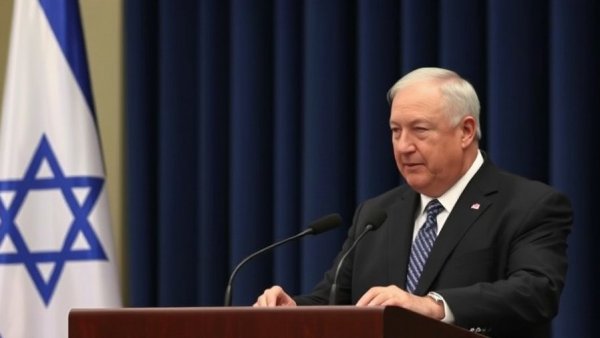
Israeli President Isaac Herzog’s recent decision to task former military chief Gadi Eisenkot with forming the next government marks a significant turning point in the country's political landscape. With Prime Minister Benjamin Netanyahu at a pivotal crossroads, this decision presents not only a challenge for Netanyahu but also an opportunity for change in Israel’s governance structure. As Eisenkot navigates the intricate terrain of political negotiations, his leadership style and approach to coalition-building will be closely watched, given the longstanding frustrations with political stagnation in Israel.
Understanding the Coalition Landscape
The complexities of Israeli politics cannot be overstated. Eisenkot, leader of the Yashar party, faces an uphill battle as he seeks to build a coalition among a fragmented parliament. Despite receiving official backing from 67 lawmakers, his coalition accounts for only 48 seats, significantly short of the 61 required for a majority. Netanyahu, who has dominated Israeli politics for years, is the leader of a coalition that has managed to secure 53 seats. This deadlock reflects profound divisions within the country, particularly among different ethnic and religious groups. The stakes are high; Israel's citizens are weary of political indecision, and the outcomes of these negotiations could influence socio-economic stability in the region.
The Role of Arab Parties in Coalition Building
Arab political parties’ involvement in Israeli governance has long been a contentious topic, and it takes center stage in this scenario. Eisenkot received recommendations from Ra’am and the Joint List, both representing predominantly Arab interests. However, their hesitance to commit to any coalition raises questions about the feasibility of government formation. Netanyahu’s vehement opposition to an Arab-supported government underscores the deep-seated tensions in Israeli society post-Hamas's October 7 massacre, which has heightened national security fears among various communities. Observers note that the dynamics of these parties could either help create a more inclusive government or continue to fuel the political chasm that has affected national identity and cohesion.
Netanyahu’s Response: A Call for Unity
In response to the potential for an Eisenkot-led government, Netanyahu issued a grave warning during a video address. He emphasized that any government dependent on Arab parties might undermine Israel’s capacity to face existential threats posed by Hamas and Iran. His calls for a national unity government resonate with certain segments of the population who fear instability and insecurity. Netanyahu’s plea reflects not only a struggle for power but also taps into widespread anxieties regarding national security and identity in a rapidly changing political landscape. He advocates for cooperation among all Zionist parties to bolster a united front against perceived threats, suggesting that collaboration is essential in an era marked by increasing uncertainty.
A Deep Dive into Public Sentiment
The political landscape is also influenced by public sentiment, especially in light of recent tragic events. The aftermath of the October 7 massacre has left deep scars on the national psyche, prompting citizens across various demographics to grapple with questions about safety, governance, and representation. Citizens are increasingly seeking leaders who prioritize security while simultaneously addressing the socio-economic inequalities that have characterized Israeli society. This balancing act will be crucial for any government, including one potentially led by Eisenkot, aiming to achieve stability and foster greater inclusivity.
The Broader Repercussions of This Political Shift
Looking ahead, this pivotal moment in Israeli politics opens up several avenues for analysis. If Eisenkot succeeds, it could symbolize a shift toward more inclusive governance, potentially addressing decades of disenfranchisement felt by some Israeli-Arabs. This could set a precedent for acknowledging the rights of minority groups within the state and improving social cohesion across fragmented communities. Conversely, a failure to form a stable government could perpetuate a cycle of political instability, pushing Israel toward yet another election — a scenario that would reverberate through its societal fabric and potentially frustrate constituents further.
Implications for Kansas City: Lessons and Reflections
As local residents and businesses in Kansas City observe these developments, they may find valuable lessons in public engagement and representation. Understanding the delicate balance of coalition politics can inform community approaches to collaboration and unity in diversity. Eisenkot’s potential rise may serve as an example of the importance of working across divisions to address pressing issues, much like how local businesses might collaborate for mutual benefit in a competitive market. Just as Eisenkot will need to forge alliances with various factions, local entities can also benefit from partnerships that navigate differences and leverage shared goals for community development.
What This Means for the Future of Israel and Beyond
In essence, the current political stalemate in Israel is both a reflection of the broader shifts in global governance and a case study in coalition management. The unfolding scenario emphasizes the necessity for dialogue and compromise, essential traits not only in international relations but also in local governance. For Kansas City, as elsewhere, fostering such a culture could pave the way for more effective problem-solving and community building. Initiatives that encourage constructive discourse and community participation could help mirror the democratic processes at play in Israel, appealing to a diverse range of voices.
In conclusion, the developments in Israeli politics provide more than just news; they offer a lens to examine our own local dynamics here in Kansas City. By staying informed and engaged, residents can cultivate a more cohesive and dynamic community. The key takeaway here is that political changes, whether in distant lands or one's own backyard, are interconnected. Have a story to share or want to contact us for more details? Drop us an email at team@kansascitythrive.com.





Write A Comment