






Understanding Apple’s Protective Measure on Communication
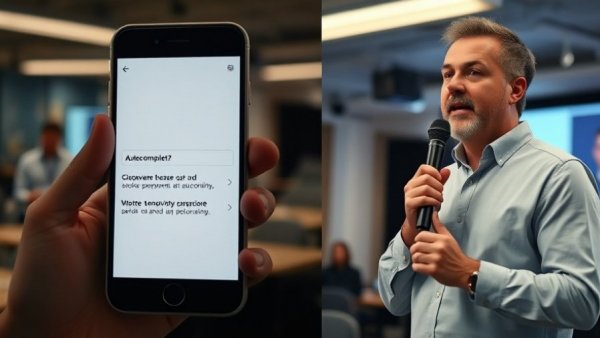
Apple's recent discovery of a gray list of banned autocomplete phrases has raised eyebrows regarding how the tech giant, as a pivotal player in the smartphone market, handles user communication. According to researcher Derik Kauffman, this expansive list comprises tens of thousands of words and phrases across various languages that iPhone users cannot easily access through autocomplete or swipe typing. This subtle alteration in communication facilitation introduces a new layer to the ongoing discourse around free expression and digital censorship, making it particularly relevant in today's polarized political climate.
The Reason Behind Autocomplete Limitations
While Apple asserts that users have the freedom to type whatever they desire, the lack of autocomplete suggestions for phrases like 'dictator Trump' and 'sleepy Joe' suggests a cautious approach to political content. This touches on a significant operational dilemma: balancing user intent and safety. The design choice to avoid suggesting potentially inflammatory or offensive phrases is likely well-intentioned; however, as Kauffman noted, it represents a 'light-touch form of censorship' that can lead to unintended consequences in personal expression. Users in Kansas City and beyond might consider whether these measures prevent controversial dialogue or simply obscure vital discussions.
Political Impact on User Experience
Notably, this gray list operates beyond mere discouragement of obscene language; it includes highly charged political terms that might skew how users communicate about sensitive topics. As Kauffman highlighted, the exclusion of terms like 'Tibetan independence' and 'occupied territories' reveals a pattern of selective visibility in political dialogue, inviting questions about how this shapes public discourse. Are users truly equipped to engage in nuanced conversations when their devices filter their vocabulary? For Kansas City business owners, especially those involved in political advocacy or community service, understanding these limitations can be crucial in crafting messages that resonate without being hindered by digital filters.
Variations Across Languages—A Global Perspective
The language-specific variations in terms banned from iOS keyboards add another layer of intrigue. Kauffman pointed out that in Hindi, derogatory phrases targeted at influential political figures cannot be typed, reflecting localized censorship tailored to protect national sentiments. French users, on the other hand, are limited from swiping 'immigration too high.' Such differences highlight a crucial aspect of Apple's approach: respecting cultural sensitivities while navigating the complex landscape of global communications. For individuals in Kansas City who interact with diverse communities, being aware of these variations could enhance cross-cultural understanding.
Inconsistencies in Filtering Practices
However, the inconsistencies within the implementation of these filters raise significant ethical eyebrows. For example, while 'read smut' may not raise any flags, including an adjective that relates to gender leads to restriction. These discrepancies not only reveal bias in the filtering process but also show the difficulty of achieving uniformity across a diverse user base. How can Apple justify a system that inconsistently shields against phrases that some may find offensive while allowing others to slip through? In the context of Kansas City, where local businesses often utilize targeted marketing and social media, understanding these inconsistencies is key to ensuring effective messaging that can reach their audience without being unnecessarily curtailed by these filters.
Reflecting on User Agency and Autonomy
This brings up crucial conversations about user agency and autonomy in a world increasingly dominated by smart technologies. As these devices continue to dictate the terms of communication, we must ask ourselves: what trade-offs are consumers willing to accept for the sake of convenience and safety? The tradeoff likely rests on how users feel empowered versus restricted, which deserves careful consideration. For residents in the Kansas City region, utilizing these devices for personal expression, particularly in politically charged environments, may inspire them to consider alternative communication platforms or strategies that prioritize user choice.
Looking Ahead: The Future of Digital Communication
As we gaze into the horizon of technological evolution, there's an opportunity for Apple and other tech giants to refine their approaches. Considerations around user autonomy must be balanced with the responsibilities of filtering content that may have real-world implications. The conversation surrounding the gray list unveils another layer of discourse that transcends technology, demanding careful navigation in a politically charged landscape. In Kansas City, where local businesses and civic groups may wish to take a stand on social issues, it is crucial that they remain aware of how these tools might impact their ability to effectively communicate.
Engaging in a Broader Conversation
Ultimately, Apple's gray list serves as a reminder of the power of words and the influence tech companies wield in shaping communication. As citizens and consumers in places like Kansas City and beyond, it may be vital to engage in dialogues about what this means for our political discourse. Perhaps your thoughts echo the concerns shared by Kauffman, or maybe you view Apple's measures as a necessary step toward safer communications. Whatever your stance, engaging in the conversation can help pave the way for a more inclusive and transparent digital communication landscape. Furthermore, local residents and businesses should actively participate in these discussions, ensuring that their voices are heard amid changing technologies.






Write A Comment